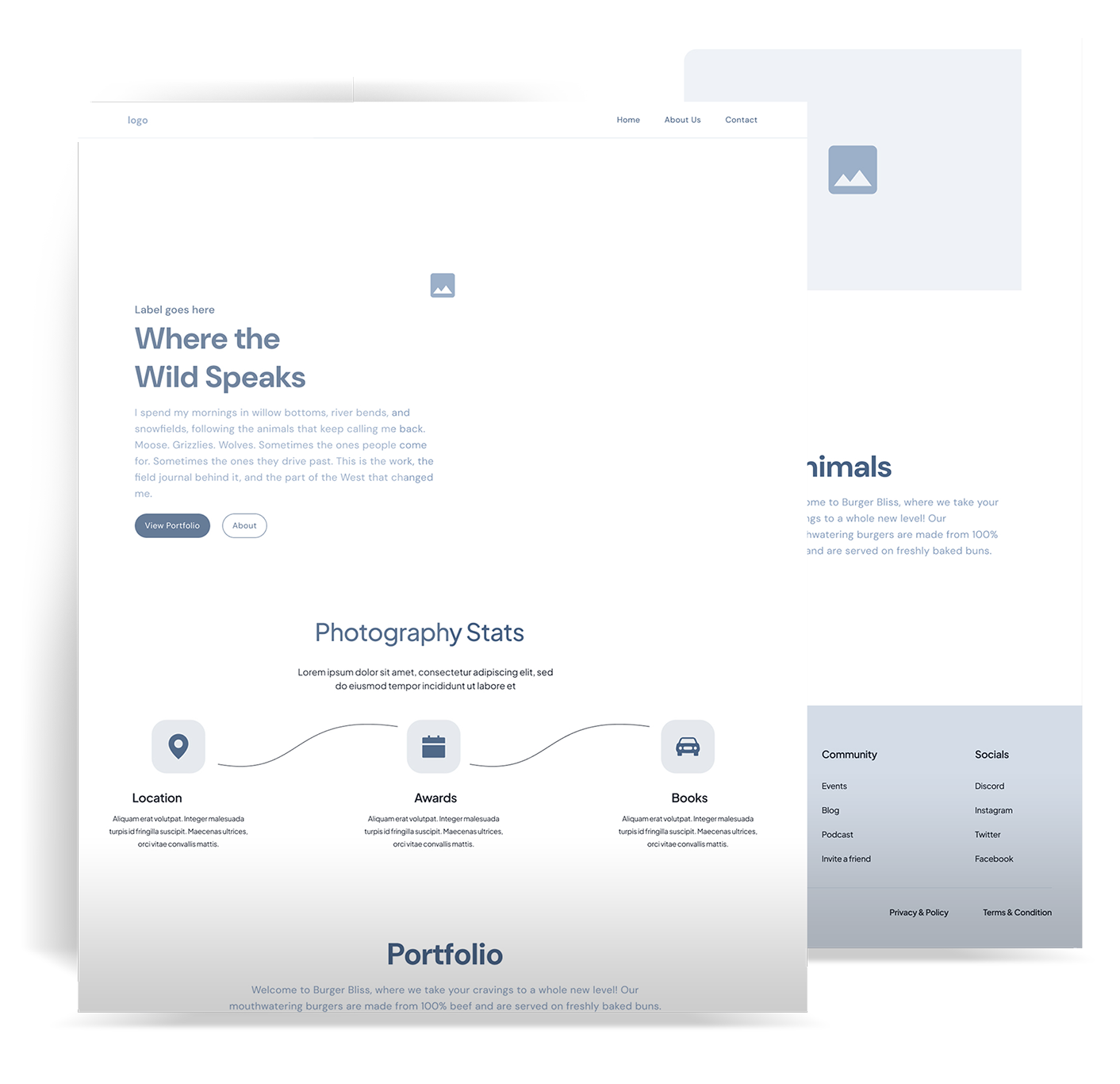
Wireframes
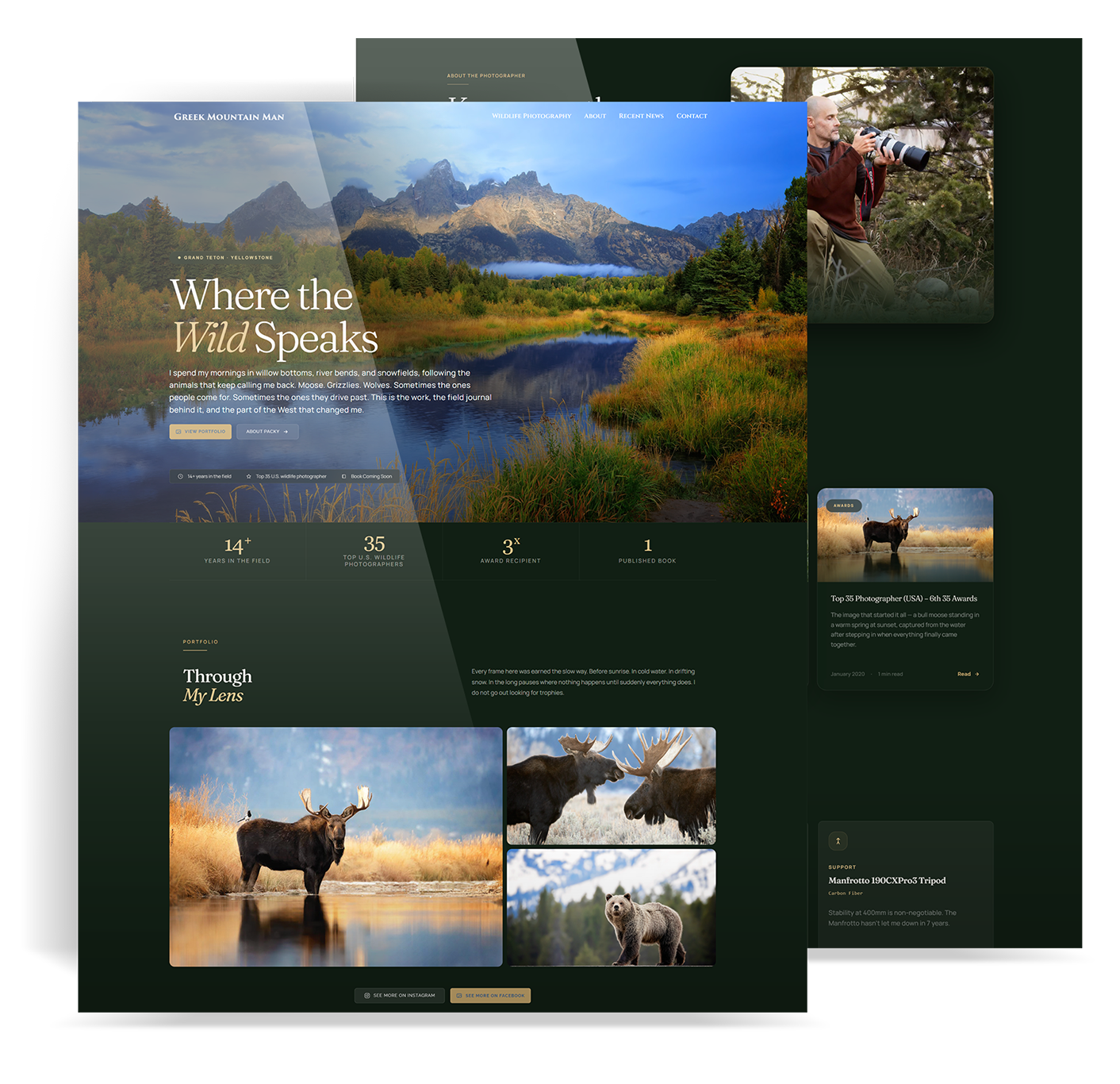
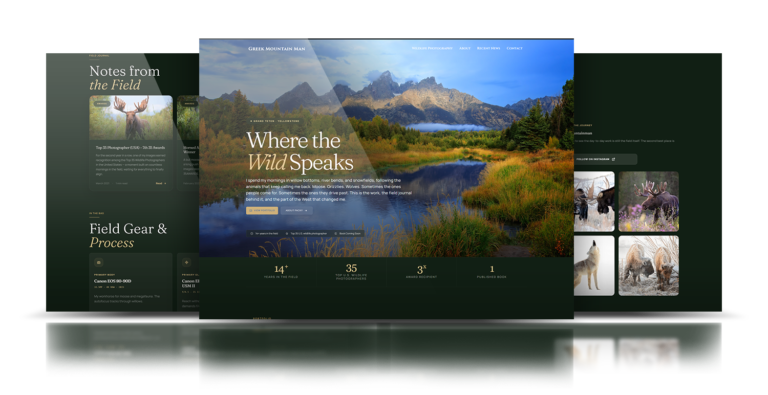
The first priority was the flow. The page needed a clearer sequence from hero to portfolio to story sections to about, then into journal, gear, book, workshops, and contact.
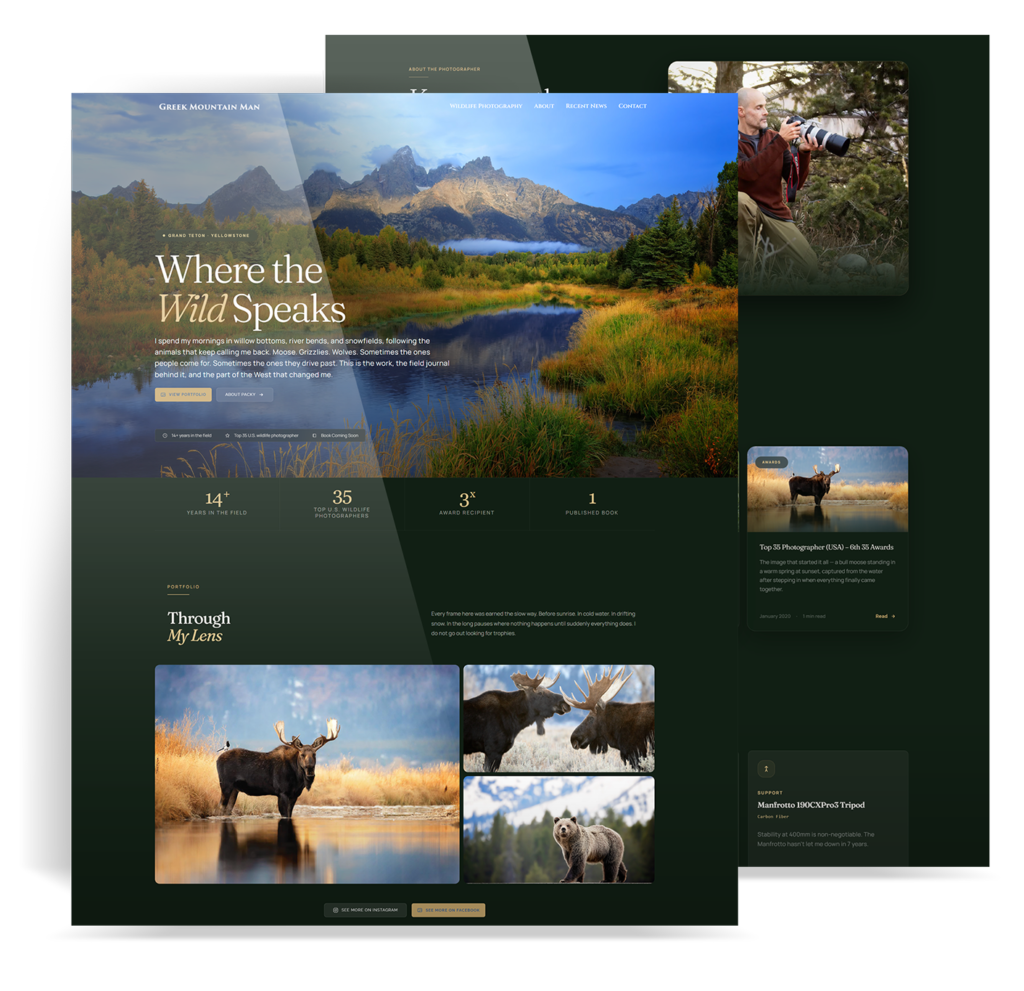
Greek Mountain Man needed a digital experience that could hold wildlife photography, field stories, and future offers in one place without feeling scattered. The work focused on one clear page flow, stronger visual rhythm, custom carousel layouts, and front-end details that made the whole site feel more intentional.
Greek Mountain Man already had strong material. The problem was shaping it into a better experience. The site needed to move cleanly from hero to photography, animal stories, about, field journal, gear, book, workshops, and contact without feeling like a stack of unrelated sections. It also needed a sharper visual system that could feel premium without getting in the way of the photography or the writing.
The rebuild focused on structure first, then presentation. A one-page layout created a clearer story from top to bottom. Custom carousel treatments helped large image sections feel more editorial. Pill styling, glassmorphism details, and tighter front-end decisions made the page feel more finished without making it heavier.
Restructured the site into a cleaner one-page experience so visitors could move through the work, stories, journal, gear, book, workshops, and contact in one continuous flow.
Built and refined custom carousel sections so the photography and animal-story areas could breathe without falling into a static grid.
Introduced a sharper interface language through pill styling, glassmorphism, and tighter card and section treatments.
Used custom HTML and CSS to refine layout, spacing, hierarchy, and section transitions across desktop and mobile.
People who want to move through the photography and animal stories in a way that feels immersive, visual, and easy to follow.
People who are also interested in the field journal, the gear and process, the upcoming book, workshops, and direct contact.
The first priority was the flow. The page needed a clearer sequence from hero to portfolio to story sections to about, then into journal, gear, book, workshops, and contact.

Once the structure was set, the work moved into the front end. Custom carousels, refined pills, glassmorphism, and tighter HTML/CSS polish turned the page from a simple content stack into a more editorial experience.
This site lives inside a long scroll, so the mobile experience had to hold together from the first section to the last.
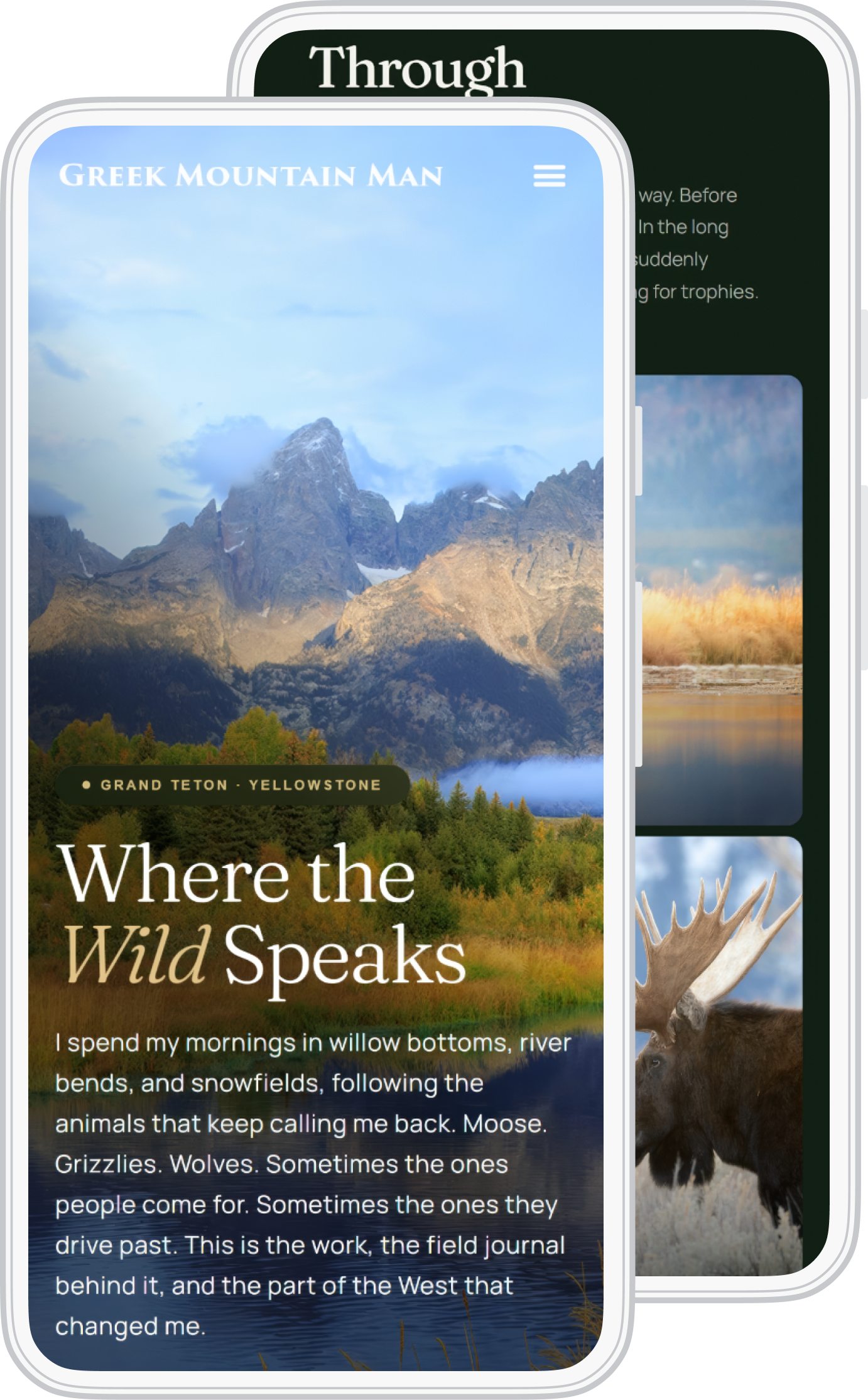
The photography and field stories needed to stay at the center, so the interface had to support the work instead of competing with it.
A one-page structure made it easier for visitors to understand the site, move through it, and find the parts that mattered.
The page needed more polish and dimension without losing lightness or readability.
A lot of the improvement came from the small things: cleaner pills, better spacing, stronger hierarchy, tighter HTML/CSS decisions, and more intentional transitions between sections.
Most teams split strategy, copy, design, and front-end work across different people. That is usually where sharp pages get softer. I work across the page so the message stays aligned from first review through launch.
Start With a Free Page Audit