Where people came from
I reviewed paths into projects from Home, About, Careers, and Contact.
KFI wanted more people to explore its engineering projects. I used interviews, analytics, SEO research, and heatmaps to guide the work, then built every page in WordPress using Elementor and Advanced Custom Fields, including custom widgets I created with HTML, CSS, and JavaScript. I worked with a creative director on the website design.
I used interviews, analytics, SEO research, and heatmaps to plan the website. I created wireframes and responsive page designs, then built every page in WordPress using Elementor and Advanced Custom Fields. I created my own custom widgets with HTML, CSS, and JavaScript. I worked with a creative director on the website design.
Project views compare 90-day reporting periods. Careers and form results come from a separate 90-day comparison that included recruitment campaigns. Results and context.
01 People
Prospective clients and candidates both wanted to understand the work, with different reasons for exploring it.
The interviews emphasized current examples, the breadth of KFI’s experience, and what a career there could involve. I used those needs to plan connections among projects, services, markets, and next steps.
The question behind the redesign
Can visitors find relevant projects and understand what KFI contributed?
Interviews, site paths, search research, and heatmaps gave me different views of the same problem.
I reviewed paths into projects from Home, About, Careers, and Contact.
Click and scroll maps showed activity and reach on the earlier website.
Relevant experience, current work, credibility, and a clearer picture of a career.
Historic search results showed project pages could be entry points.
These are audience needs drawn from the research, not named participants or validated personas.
Examples that show relevant experience.
Needs to know: Has KFI done work like mine?
Current work that makes a possible career concrete.
Needs to know: What kinds of projects could I join?
Project context connected to KFI’s capabilities.
Needs to know: How does this work relate to the service I need?
A useful route to contact or current openings.
Needs to know: Where do I go next?
Interviews + audience needs
The interviews connected project discovery to two needs: judging KFI’s experience and understanding the kind of work a career there could involve.
The interview themes emphasized project history, current work, and the breadth of KFI’s capabilities. Project examples needed enough context to help a visitor evaluate the firm.
Current project examples helped explain the variety of engineering work and what a possible career could involve. Careers and openings still needed their own direct route.
I used the findings to plan connections among project examples, service information, markets, and contact routes. The same work could help both audiences without forcing them into the same next step.
Paraphrased interview themes and design implications. Audience labels summarize needs; they are not participant identities or validated personas.
02 Design
Three decisions shaped the redesign: make relevant work visible, connect examples to useful information, and keep the phone experience readable.
The old site already had project cards and categories. I worked on how the portfolio connected to services, markets, and the wider company story.
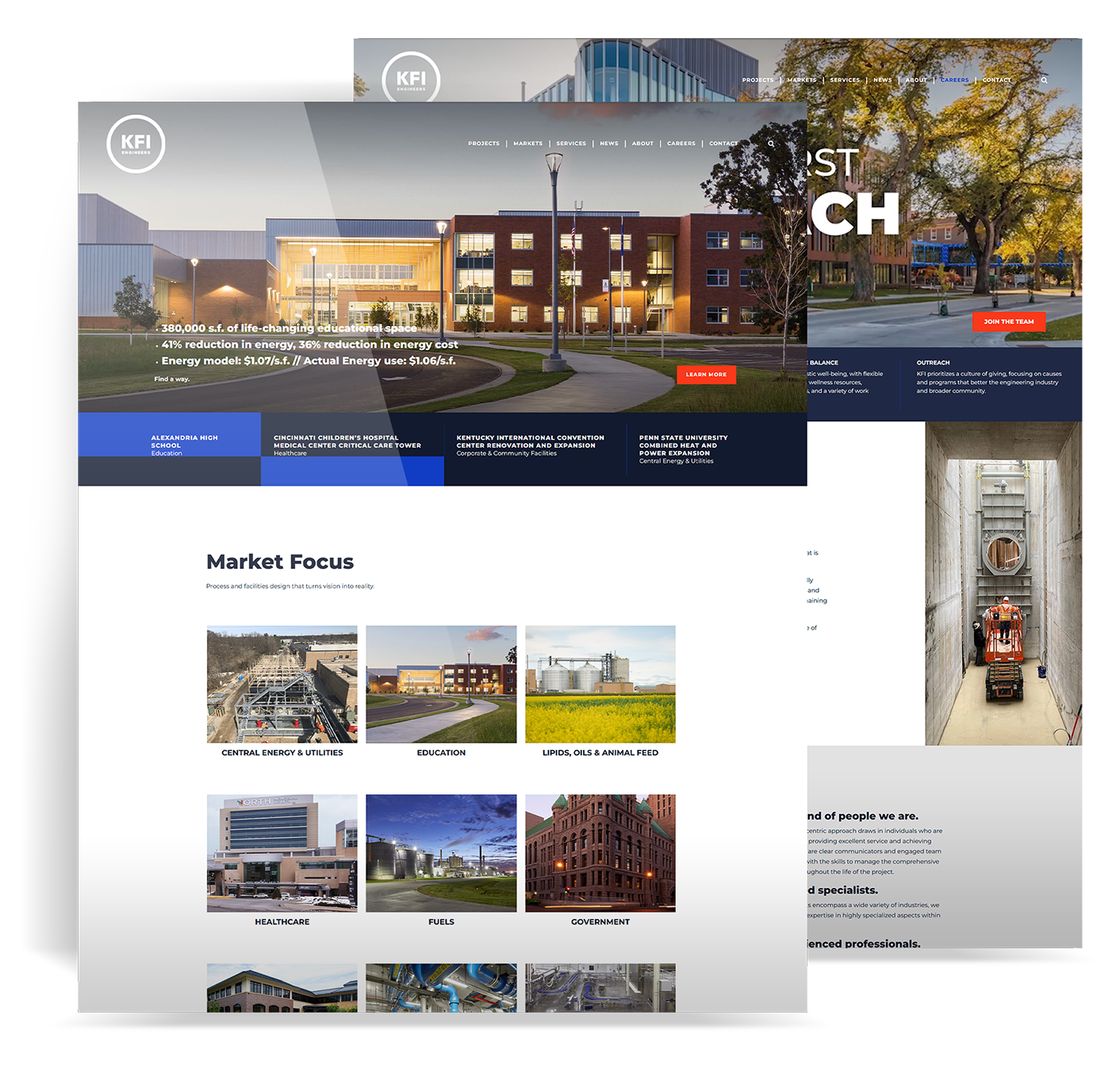
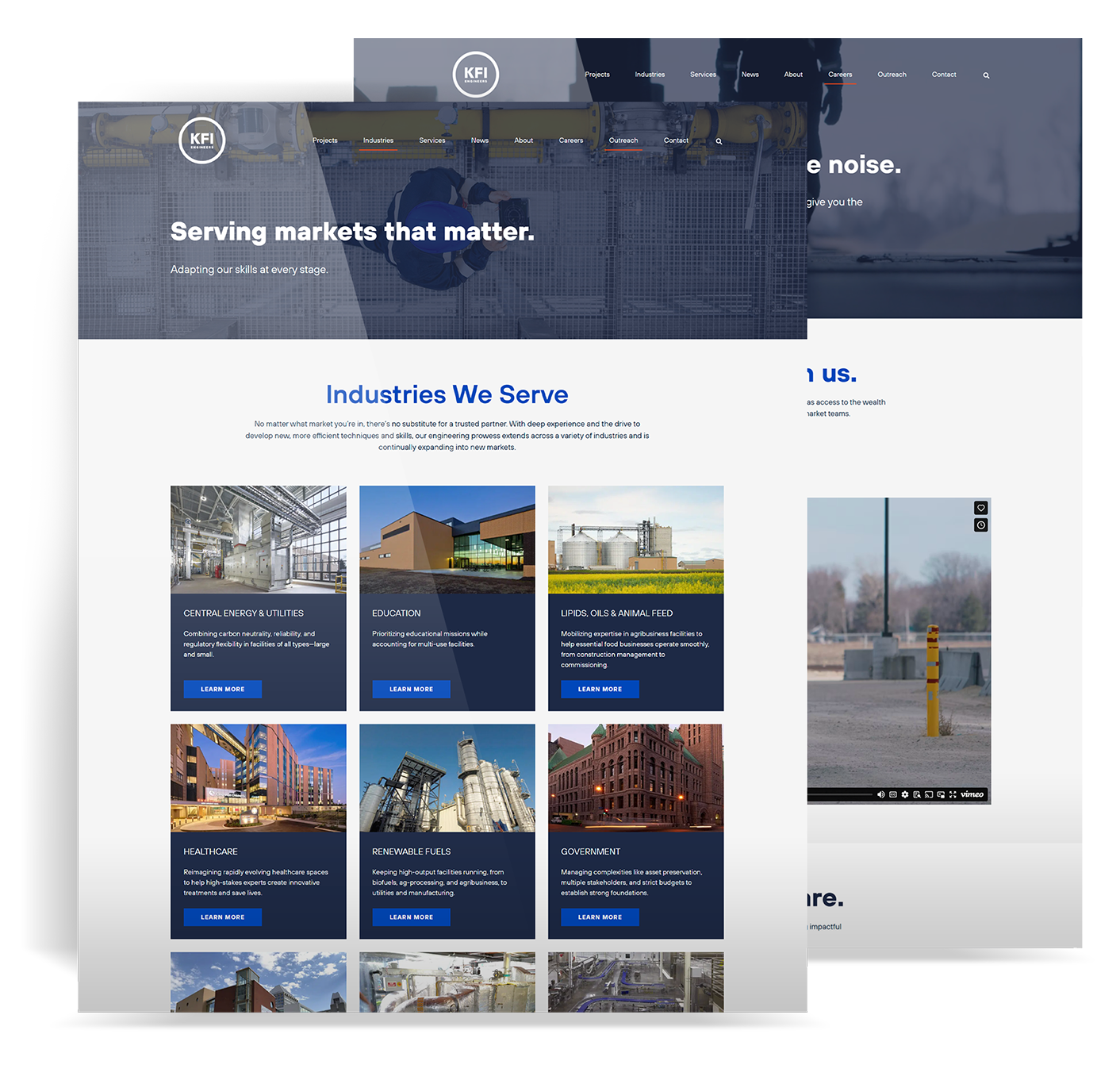
Supplied redesign artwork; the homepage presentation matches the live site.
Original website and redesign artifacts. The change focused on discovery, context, and connections, rather than inventing project browsing for the first time.
Representative reconstruction
The earlier site already had project categories and cards. I worked on how projects connected to the services and markets they represented, with clear routes for people who wanted to learn more or make contact.
This explanatory HTML wireframe shows the page hierarchy, using simplified blocks. Choose a label to highlight each part. It is not a screenshot of the delivered website.
The original planning artifact is preserved separately from the simplified illustration above.
Enlarge image ↗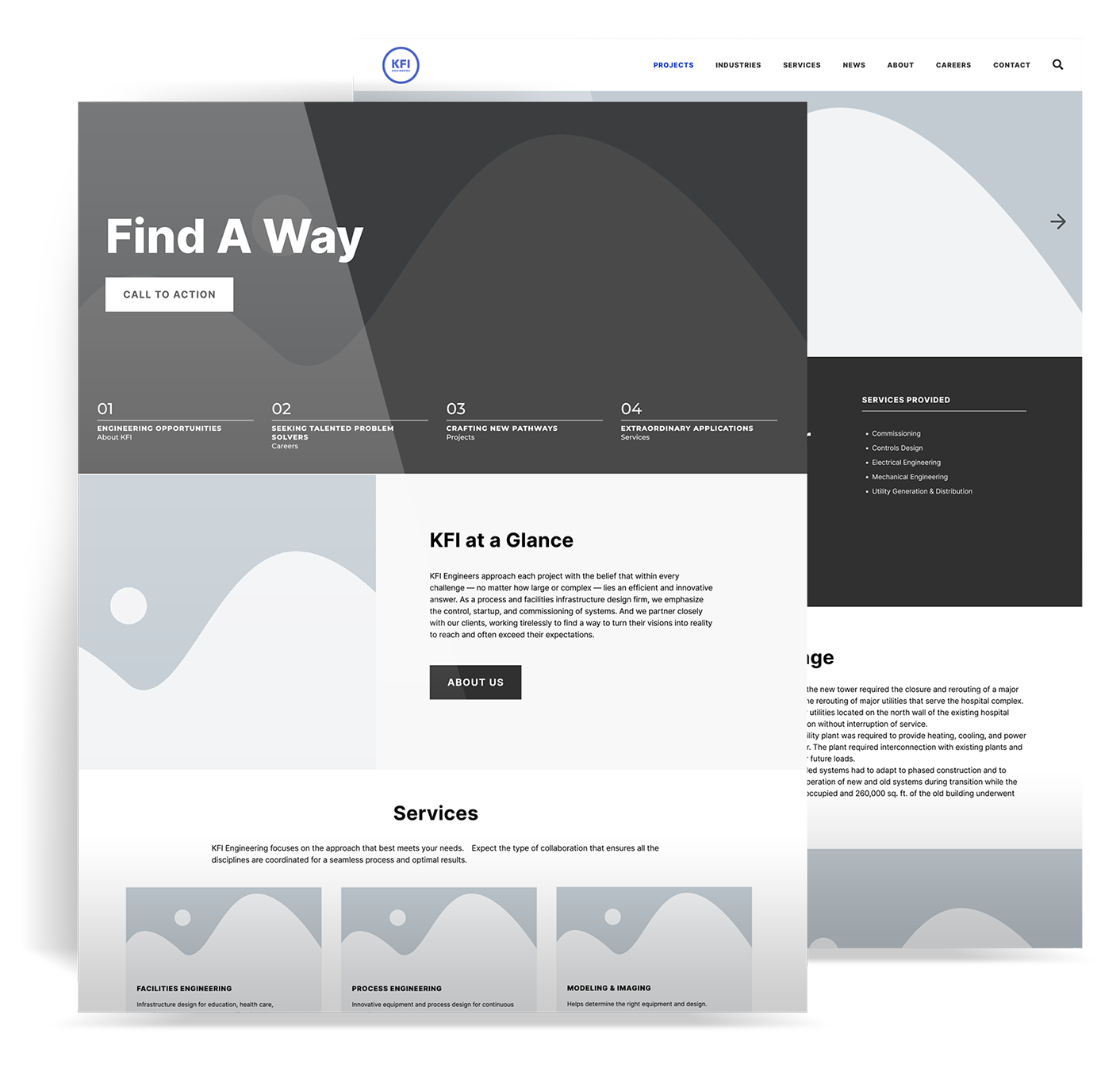
Mobile path
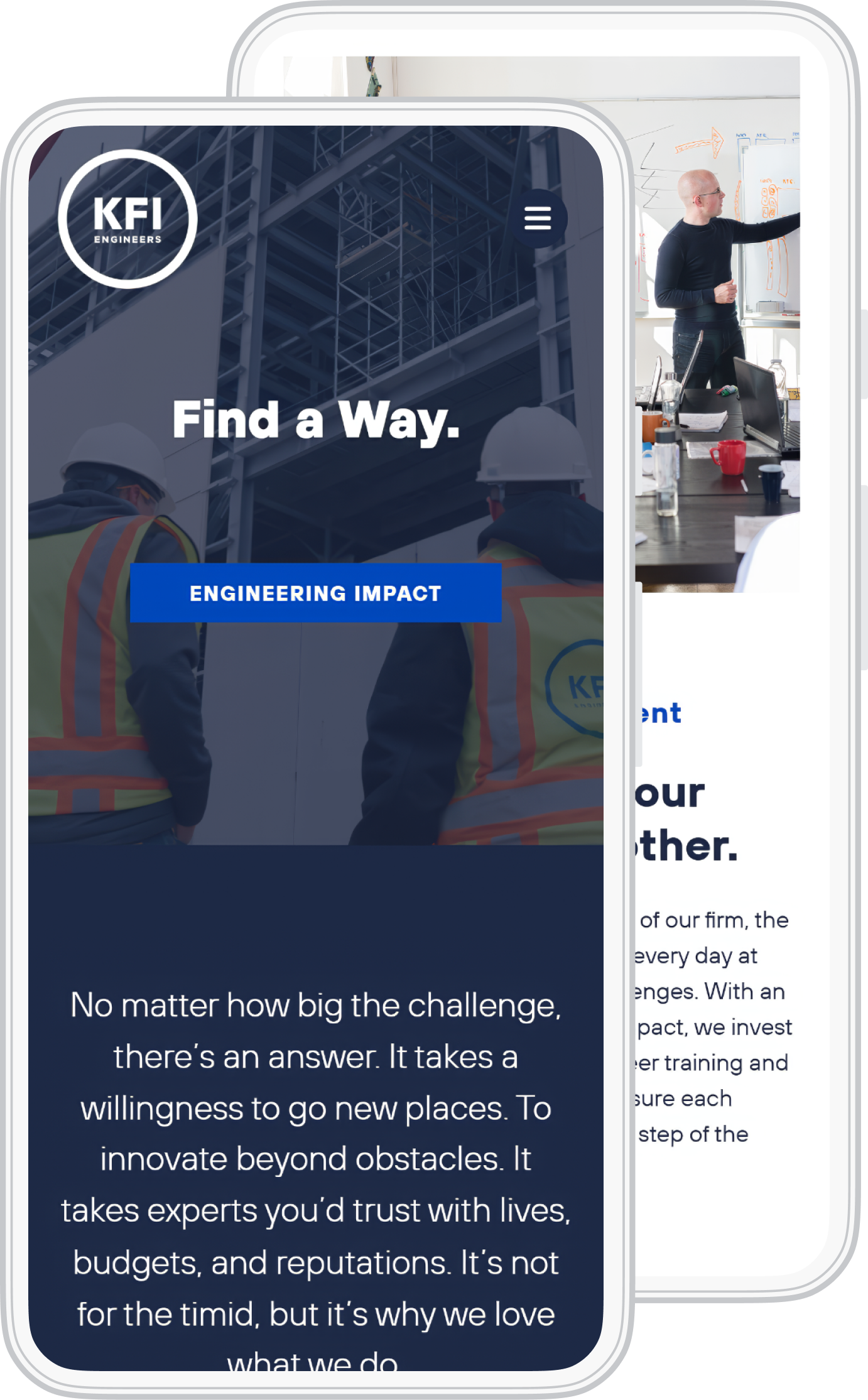
I treated mobile as its own reading path. Project information, images, and controls needed a clear sequence on a narrow screen.
Find an engineering project connected to the visitor’s interest.
Understand the work and its context.
Explore related services and markets.
Use the examples to understand a possible career.
Continue to contact or current openings.
03 Build
I built every page in WordPress using Elementor and Advanced Custom Fields, and created custom widgets with HTML, CSS, and JavaScript. I carried the research, wireframes, and website design into the working site.
I created every page in WordPress using Elementor and ACF, with custom widgets built in HTML, CSS, and JavaScript.
I translated the wireframes and website design into responsive HTML and CSS for desktop and phones.
I connected project examples with the context visitors needed to evaluate KFI.
I built the complete site in WordPress using Elementor and Advanced Custom Fields.
I carried the page designs into the build, with the portfolio and Careers experience central to the work.
I wrote HTML, CSS, and JavaScript for custom widgets within the WordPress/Elementor build.
I carried the page designs into the working website and reviewed the pages against their intended purpose.
Design into the website
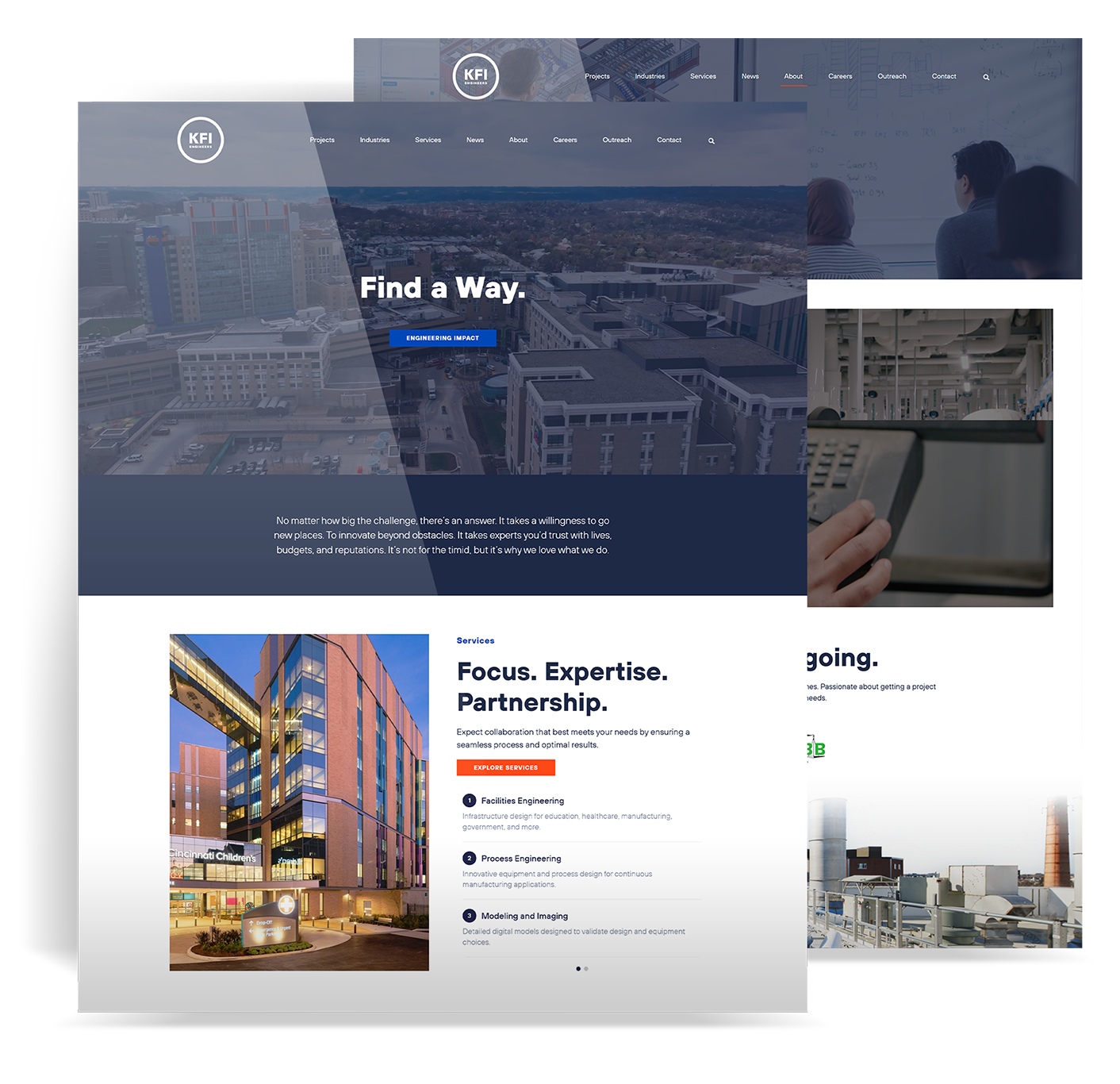
The supplied market and portfolio artwork shows more of the redesigned page system. I worked with a creative director on the website design, and I personally built every page in WordPress using ACF.
Original KFI showcase artwork, preserved in full.
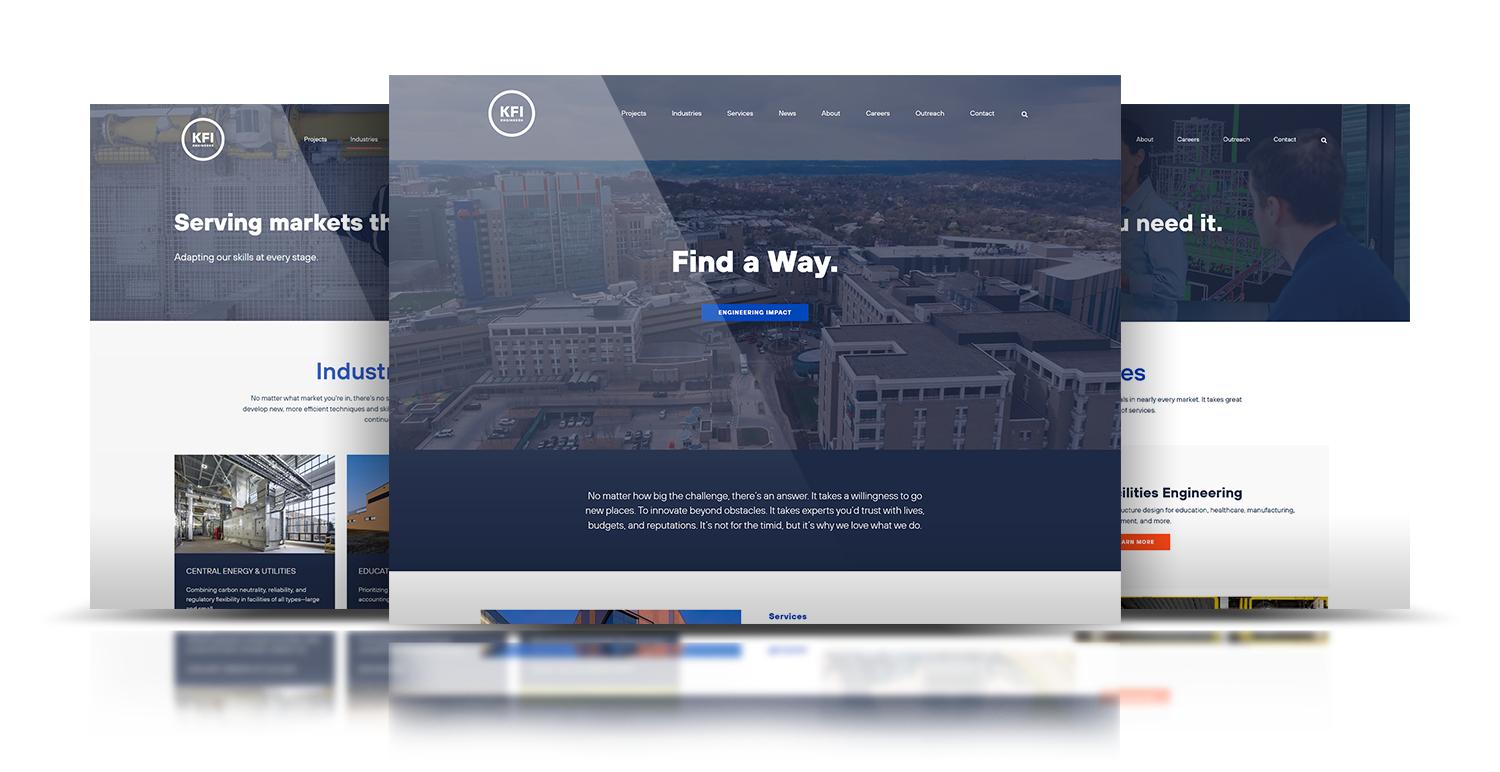
Supplied project artwork. Select it to inspect the complete view.
Enlarge image04 Behavior
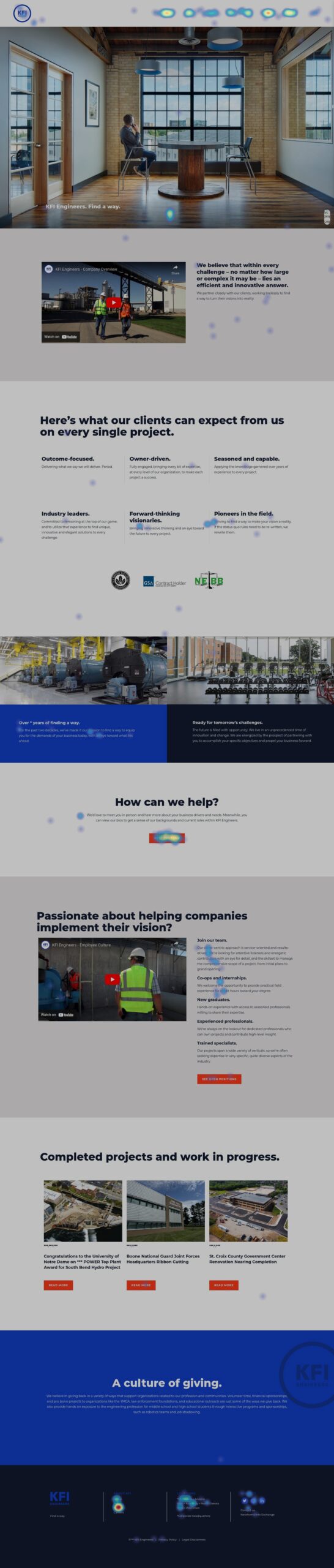
I reviewed click activity and scroll reach on the earlier site alongside the interviews, search research, and page paths.

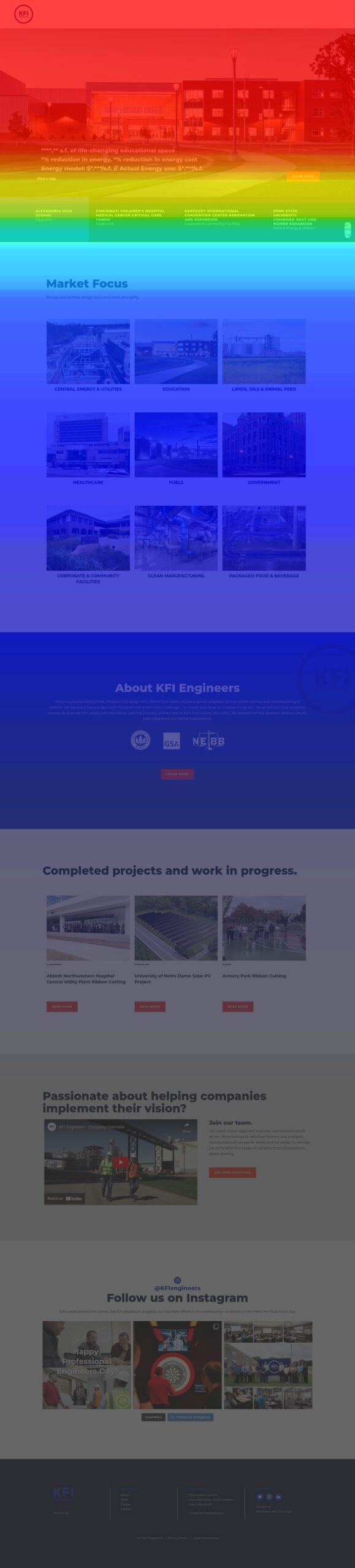
Earlier website · Click heatmap
The earlier page already had category filters and project cards. The heatmap records click activity; it does not show eye gaze or explain why someone acted.
The original filters and project cards are part of the evidence. I used this alongside interviews, navigation paths, and search research to plan the redesign.
Open full heatmap ↗Content structure
The planning connected projects with services, markets, and contact while keeping Careers direct. This diagram shows proposed page connections, not a measured funnel.
See relevant work, understand the expertise behind it, and find a useful contact route.
Explore the kind of engineering work they could join, then reach current openings directly.
A planning illustration informed by the interviews and pathway review. The branches do not represent completed conversions.
May 14–August 11, 2024
The views and landing sessions describe the same period. They are separate from the confirmed 30-to-900+ before-and-after result.
Separate analyses and branches; counts are not additive conversions. Search positions are research evidence, not a claimed ranking gain.
Optional full-size evidence from the earlier website.
05 Results
Project-page views grew from 30 to more than 900 across 90-day reporting periods after the website work. That addressed KFI’s goal of getting more attention on its engineering projects.
30 to 900+
Before and after website work, measured over 90-day reporting periods.
+64%
708 submitted forms in the separate post-build review.
+48%
16,989, compared with 11,449 in the preceding period.
1,819 clicks to View Current Openings during the separate review period.
Project views compare 90-day reporting periods. Careers and form results come from a separate 90-day comparison that included recruitment campaigns.
The separate post-build review also recorded growth in Project and People page views and time on page.
Engaged visits rose 8.5%. The report gives a Careers action rate of 12.7% to 32.8%, but does not define that key action. Organic sessions declined, so the findings are not a blanket organic-growth claim.
I researched, designed, and personally built the complete WordPress/ACF website so project examples could help people evaluate KFI and choose a useful next step. The later reporting gave us evidence to guide further improvements.